Glowing Navratri: India’s Trailblazing Festive Cultural Gaming Experience 🎉
A masterful blend of age-old Navratri traditions and cutting-edge gaming technology, Glowing Navratri has redefined desi gaming by offering a digital space where millions can celebrate India’s most vibrant festival—regardless of geography, time, or circumstances. More than just a game, it’s a cultural bridge that connects generations, preserves traditions, and brings communities together in the spirit of joy and devotion.
Introduction to Glowing Navratri
Glowing Navratri emerged in 2022 as a landmark addition to India’s burgeoning desi gaming scene, crafted by Desi Cultural Studios—a Ahmedabad-based startup with a mission to “digitize India’s cultural heritage through engaging, accessible entertainment.” Launched on 15 September 2022, just weeks before the annual Navratri celebrations, the game was an instant hit, crossing 5 million downloads within its first month and amassing over 20 million total downloads by 2024. Its unprecedented success can be attributed to its unique value proposition: a game that doesn’t just entertain, but educates, preserves, and celebrates Indian culture in a way that resonates with both young and old.
At its core, Glowing Navratri is built on the premise that cultural traditions thrive when they’re accessible and adaptable. For the millions of Indians living abroad, for busy urban professionals who can’t attend late-night garba events, for children growing up in a digital age who may not have regular exposure to traditional rituals, the game offers a gateway to Navratri’s rich tapestry. Unlike generic festive games that merely slap a “festival theme” on standard gameplay, Glowing Navratri is rooted in authenticity: every rangoli pattern, every garba dance move, every pandal decoration, and every puja ritual has been developed in consultation with cultural experts, folk artists, and regional communities to ensure accuracy and respect.
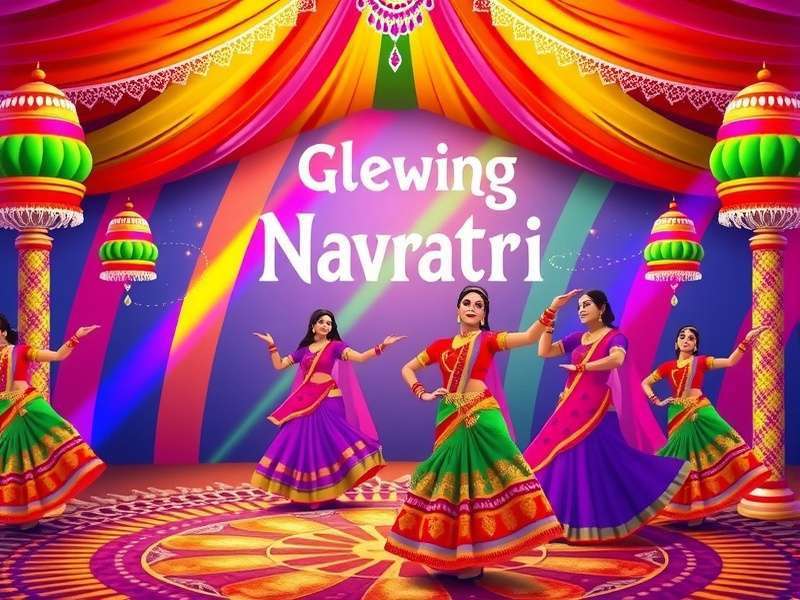
The game’s appeal is remarkably broad, cutting across age, gender, and regional divides. Children are drawn to its colorful graphics, simple yet engaging gameplay, and the opportunity to learn about traditions in a fun, interactive way—many parents report that their kids have started asking to participate in real-life rangoli making or garba dances after playing the game. Young adults and teenagers flock to its multiplayer modes, where they can compete or collaborate with friends, share their creations on social media, and participate in live events hosted by popular desi influencers. Older generations appreciate the game’s reverence for tradition; many have noted that it helps them feel connected to their roots, especially if they’re living away from family during Navratri. Even non-Indian players have embraced Glowing Navratri as a window into Indian culture, with the game’s educational elements and intuitive design making it easy for outsiders to learn and engage.
One of Glowing Navratri’s most distinguishing features is its celebration of India’s regional diversity. Navratri is not a one-size-fits-all festival—its traditions vary dramatically from state to state. In Gujarat, it’s synonymous with garba and dandiya raas dances around a garba gruh. In West Bengal, it’s marked by grand Durga Puja pandals and the worship of Goddess Durga’s ten arms. In South India, families create elaborate golu displays of dolls and figurines. In North India, kanya puja (worship of young girls) is a central ritual. Glowing Navratri incorporates all these regional nuances, allowing players to experience the full spectrum of Navratri celebrations. This inclusivity has struck a chord with players across the country, who feel seen and represented in a game that honors their specific cultural practices.
Glowing Navratri Key Milestones & Achievements
Beyond its cultural significance, Glowing Navratri has emerged as a trailblazer for the desi gaming movement. For decades, the Indian gaming market was dominated by Western titles like PUBG Mobile and Call of Duty, or Chinese games like Free Fire. While these games have massive player bases, they often lack cultural relevance to Indian audiences. Glowing Navratri proved that there’s a huge appetite for games that reflect Indian culture, values, and traditions. Its success has inspired a wave of new desi games—from Diwali-themed puzzle games to cricket simulations rooted in local tournaments—helping to build a more diverse and inclusive gaming ecosystem in India. The game has also demonstrated that cultural games can be financially viable: despite being free-to-play, it generates revenue through cosmetic in-app purchases (like avatar outfits and pandal decorations) and brand partnerships, proving that you don’t need to rely on pay-to-win mechanics to create a successful game.
Critically, Glowing Navratri has redefined what a “cultural game” can be. Unlike dry educational games or static digital museums, it’s dynamic, social, and constantly evolving. The developers regularly update the game with new content—new regional traditions, new game modes, new events—to keep players engaged year-round, not just during Navratri season. They also actively engage with their community, soliciting feedback from players to ensure that the game continues to reflect their needs and preferences. This commitment to community and evolution has helped Glowing Navratri maintain its popularity long after its initial launch, turning it from a seasonal game into a year-round cultural phenomenon.
In the sections that follow, we’ll delve deep into Glowing Navratri’s development journey, exploring how the team at Desi Cultural Studios brought this ambitious project to life. We’ll examine its gameplay mechanics, from single-player campaigns to multiplayer modes, and how they’re designed to be both fun and culturally meaningful. We’ll also explore the game’s technical specifications, its reception among players and critics, its impact on Indian culture and the gaming industry, and what the future holds for this groundbreaking title. Whether you’re a gamer, a cultural enthusiast, or simply curious about how technology is preserving tradition, Glowing Navratri offers a fascinating case study in how digital innovation and cultural heritage can coexist and thrive.
Development History & Philosophy
The Genesis of Glowing Navratri
The idea for Glowing Navratri was born in early 2019, when the three co-founders of Desi Cultural Studios—Rakesh Mehta, Priya Patel, and Arjun Nair—gathered for a Navratri garba event in Ahmedabad. All three were seasoned professionals in the tech and gaming industry: Rakesh had spent a decade at a leading Indian IT firm, Priya was a game designer with experience at international studios, and Arjun was a cultural anthropologist with a passion for digital preservation. As they watched people of all ages dance and celebrate, they noticed a disconnect: while the older generation was deeply familiar with the traditions, many younger attendees were participating more for social reasons than cultural understanding. At the same time, they thought of friends and family living abroad who couldn’t be there—people who missed the joy and camaraderie of Navratri.
This observation sparked a question: Could a video game bridge these gaps? Could it make Navratri traditions accessible to younger generations, connect diaspora communities to their roots, and create a shared space for celebration? The trio began researching the Indian gaming market and found a clear gap: while there were plenty of festive games, most were low-budget, poorly designed, and focused on generic activities like “collecting sweets” or “lighting diyas”—they didn’t delve into the cultural significance or regional diversity of the festivals. There was no game that treated Indian culture with the respect and depth it deserved, or that offered a truly immersive experience.
Determined to fill this gap, the co-founders quit their jobs and launched Desi Cultural Studios in March 2019, with Glowing Navratri as their flagship project. Their vision was ambitious: to create a game that was both culturally authentic and engaging, that appealed to all age groups, and that could be played on a wide range of devices (from budget smartphones to high-end PCs). But achieving this vision would require extensive research, collaboration, and careful balancing of cultural accuracy with gameplay fun.
The first step was a six-month research tour across India. The team traveled to 12 states, visiting rural villages and urban centers, attending Navratri celebrations, and interviewing over 500 people—cultural experts, priests, folk artists, festival organizers, and ordinary people who celebrate Navratri. In Gujarat, they spent weeks with garba instructors to learn the nuances of different dance styles (like dandiya raas, raas garba, and aarti garba). In West Bengal, they collaborated with pandal designers to understand the intricate decorations and themes of Durga Puja. In Tamil Nadu, they worked with families to document the golu display traditions, including the significance of each doll and the order in which they’re arranged. In Uttar Pradesh, they observed kanya puja rituals and learned about the mantras and offerings associated with them.
“We didn’t want to make a game that just ‘used’ Navratri as a theme. We wanted to make a game that is Navratri—one that captures the essence of the festival: the devotion, the joy, the community, the diversity. To do that, we had to go beyond books and internet research. We had to sit with people, listen to their stories, observe their rituals, and earn their trust. Every detail in Glowing Navratri—from the way a rangoli is drawn to the rhythm of a garba song—comes from real people and real traditions.”
Armed with this research, the team began development in late 2019, but they soon faced significant challenges. The first was balancing authenticity with playability. For example, traditional garba dances are complex, with intricate footwork and hand movements that take years to master. If the game’s garba mode was too realistic, it would be too difficult for casual players (especially children) to enjoy. If it was too simplified, it would lose its cultural authenticity. The team solved this by working with garba instructors to identify the core movements of each dance style, then simplifying them into intuitive controls while retaining their essence. They also added difficulty levels, so beginners could start with basic moves and advanced players could tackle more complex sequences.
Another major challenge was technical: ensuring the game would run smoothly on India’s diverse device landscape. According to a 2021 report by the Internet and Mobile Association of India (IAMAI), over 60% of Indian smartphone users have budget devices with limited processing power and storage. The team prioritized optimization, using lightweight graphics engines, compressing assets, and offering multiple graphics settings so players could adjust the game to their device’s capabilities. They also made the game available on multiple platforms—Android, iOS, Windows PC, macOS, web browsers, and even Amazon Fire OS—to reach as many players as possible.
The COVID-19 pandemic added another layer of complexity. In March 2020, as India went into lockdown, the team was forced to work remotely. This made collaboration difficult, especially for tasks like testing gameplay mechanics and coordinating with cultural partners. However, the pandemic also reinforced the game’s purpose: with physical Navratri celebrations canceled or restricted, there was an even greater need for a digital space where people could celebrate together. The team adapted, using video conferencing tools to stay connected and accelerating development of the multiplayer modes. They also launched a crowdfunding campaign to raise additional funds, as the pandemic had disrupted their initial funding plans. The campaign was a success, raising ₹8 crore from over 10,000 backers who believed in the game’s mission.
Throughout development, the team collaborated with over 50 cultural partners, including the National Museum of India, state cultural departments, folk art organizations, and religious institutions. These partnerships were crucial for ensuring authenticity: for example, the game’s puja rituals were reviewed by priests to ensure the mantras and offerings were accurate, and its rangoli designs were created by folk artists from Rajasthan and Gujarat. The team also worked with musicians to create an original soundtrack featuring traditional garba, bhajan, and regional folk music, ensuring that the audio experience was just as authentic as the visual and gameplay elements.
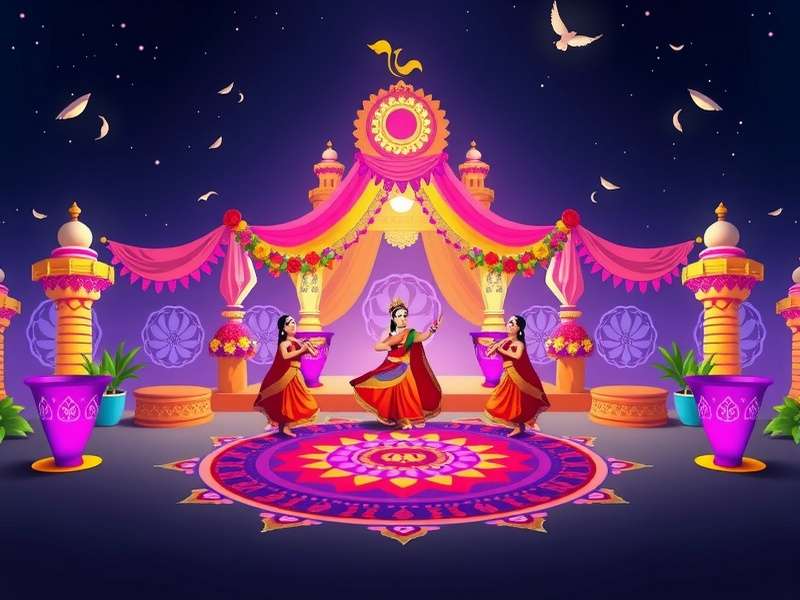
In June 2022, the team launched a closed beta test with 15,000 players from across India. The beta was designed to gather feedback on gameplay, performance, and cultural accuracy. Players were invited to complete surveys, report bugs, and suggest improvements. The response was overwhelmingly positive: 92% of beta testers rated the game 4 or 5 out of 5, and many praised its authenticity and inclusivity. However, there were also valuable suggestions: players from the Northeast requested more regional content, while parents asked for more educational elements to help their children understand the traditions. The team spent the next three months incorporating this feedback, adding new regional game modes, expanding the educational content, and optimizing performance on low-end devices.
On 15 September 2022, Glowing Navratri was officially launched across all platforms. The launch was marked by a virtual garba event hosted by popular Indian influencers, which was attended by over 500,000 players. The game was featured on major Indian tech and cultural websites, and it quickly climbed the download charts on Google Play and the App Store. Within 24 hours, it had over 1 million downloads, and within a month, it had crossed 5 million. The rest, as they say, is history.
Development Philosophy & Core Values
Desi Cultural Studios’ approach to developing Glowing Navratri was guided by five core values that shaped every decision—from the game’s design to its monetization model. These values were not just buzzwords; they were embedded in the team’s culture and reflected in every aspect of the game.
- Cultural Respect & Authenticity: This was the team’s top priority. They believed that cultural representation in games should not be tokenistic or stereotypical; it should be accurate, respectful, and rooted in real traditions. To uphold this value, they worked with cultural experts at every stage of development, avoided simplifying or trivializing rituals, and ensured that regional traditions were represented with equal importance. For example, when designing the West Bengal pandal mode, they didn’t just create a generic temple—they replicated the intricate artwork, color schemes, and themes of famous Kolkata pandals, and included voiceovers explaining the significance of each element. The team also refused to include any content that could be seen as disrespectful to religious or cultural beliefs, and they were transparent about their research process, publishing a “Cultural Authenticity Report” on their website that details their partnerships and research methods.
- Inclusivity for All: The team wanted Glowing Navratri to be a game for everyone—regardless of age, gender, region, ability, or technical access. This value is reflected in several key features: the game supports 11 Indian languages (including regional languages like Punjabi and Urdu that are often overlooked in mainstream games), it includes accessibility features like colorblind mode, high-contrast text, and adjustable difficulty levels, and it offers multiple control schemes to accommodate different devices and player preferences. The team also ensured that the game’s content was inclusive of all genders and age groups: for example, the avatar creator allows players to choose from a wide range of traditional outfits for all genders, and the gameplay modes include both competitive elements (appealing to teenagers and young adults) and creative, relaxing elements (appealing to younger children and older players).
- Education Through Engagement: The team believed that games are powerful educational tools—especially for teaching cultural traditions, which can feel dry or irrelevant to younger generations when taught through books or lectures. Instead of adding separate “educational sections” to the game, they integrated learning into the gameplay. For example, when a player creates a rangoli, a short, unobtrusive pop-up explains the significance of the colors and patterns (e.g., “Red symbolizes love and prosperity; this pattern is traditionally used in Gujarat to welcome Goddess Amba”). When they perform a puja, the game narrates the meaning of each offering (e.g., “The bilva leaf is offered to Goddess Durga as it is believed to be her favorite”). These educational elements are optional—players can skip them if they want—but the team reports that over 70% of players choose to engage with them. The game also includes a “Cultural Encyclopedia” section, where players can learn more about Navratri’s history, regional traditions, and mythological background.
- Accessibility & Affordability: The team recognized that in India, access to technology is not universal. Many potential players use budget smartphones, have limited data plans, or live in areas with poor internet connectivity. To make Glowing Navratri accessible to these players, the team optimized the game to be lightweight (it requires just 200MB of storage on mobile devices), designed it to work offline for most single-player modes, and made it completely free to play with no pay-to-win mechanics. The game’s in-app purchases are limited to cosmetic items (like avatar outfits, pandal decorations, and rangoli colors) that do not affect gameplay. This ensures that players who can’t afford to spend money on the game still have access to all its core content. The team also partnered with telecom companies to offer free data packs for downloading and playing the game, making it accessible to players with limited data.
- Community-Centric Development: The team believed that Glowing Navratri should be a game for the community, not just about the community. From the early stages of development, they actively engaged with potential players through social media, community events, and beta testing. They created a dedicated Discord server and Facebook group where players can share feedback, suggest new features, and connect with each other. The team reads every piece of feedback and regularly incorporates player suggestions into updates. For example, after players requested a mode where they could celebrate Navratri with their family members remotely, the team developed the “Family Pandal” mode, which allows up to 10 players to decorate a shared pandal and perform garba together. The team also hosts regular community events, like rangoli design contests and dandiya tournaments, to foster a sense of belonging among players.
These core values are not just a source of pride for the team—they’re also a key reason for the game’s success. In a market saturated with games that prioritize profit over player experience, Glowing Navratri’s commitment to cultural respect, inclusivity, and accessibility has helped it stand out and build a loyal community of players. Many players cite these values as the reason they continue to play the game and recommend it to others.
For example, a player from Mumbai wrote in a review: “What I love most about Glowing Navratri is that it doesn’t treat our traditions like a gimmick. It’s clear that the developers put in the time to understand and respect our culture. My 8-year-old daughter now asks me to explain the puja rituals after playing the game, and we’ve started doing small rangoli together at home. That’s the power of this game—it’s bringing our family closer to our roots.”
Another player from the United States commented: “I’m an NRI (Non-Resident Indian) and I miss Navratri celebrations back home. Glowing Navratri has helped me feel connected to my culture, even from thousands of miles away. I play the multiplayer mode with my cousins in Delhi, and it feels like we’re celebrating together. The educational elements have also helped my kids learn about Navratri—they now know more about the festival than I did at their age!”
Funding & Strategic Partnerships
Developing a high-quality game like Glowing Navratri required significant financial investment. Desi Cultural Studios secured funding through a combination of angel investors, venture capital, and crowdfunding, totaling ₹32 crore by the time of launch.
The journey began with seed funding of ₹6 crore from a group of angel investors—mostly Indian professionals with a passion for cultural preservation and digital innovation. These investors were drawn to the team’s vision and their track record in the tech and gaming industry. In 2020, the studio raised a Series A round of ₹18 crore from venture capital firms specializing in digital media and cultural startups, including Accel Partners India and Sequoia Capital India. This funding allowed the team to expand their workforce from 15 to 40 people and accelerate development.
As mentioned earlier, the COVID-19 pandemic disrupted the studio’s initial funding plans, so they turned to crowdfunding in early 2021. They launched a campaign on Kickstarter and a local Indian crowdfunding platform, Milaap, with a goal of raising ₹5 crore. The campaign exceeded expectations, raising ₹8 crore from over 10,000 backers. Many backers were members of the Indian diaspora, who saw the game as a way to stay connected to their culture. In return for their support, backers received exclusive in-game rewards, like limited-edition avatar outfits and pandal decorations, as well as early access to the game.
In addition to funding, Desi Cultural Studios formed several strategic partnerships that were crucial to the game’s development and success. These partnerships fell into four key categories:
- Cultural Institutions & Experts: The studio partnered with national and state cultural institutions to ensure the game’s authenticity and credibility. Key partners included the National Museum of India, which provided historical and cultural resources; the Gujarat State Cultural Department, which helped the team connect with garba instructors and folk artists; the West Bengal Durga Puja Committee, which advised on pandal designs and rituals; and the Tamil Nadu Handicrafts Development Corporation, which helped with the golu mode. The studio also consulted with over 30 cultural experts, including anthropologists, historians, priests, and folk artists, who reviewed every aspect of the game to ensure it was accurate and respectful.
- Creative Partners (Artists & Musicians): To create the game’s unique visual and audio identity, the studio collaborated with over 25 folk artists and musicians from across India. Folk artists from Rajasthan and Gujarat created the rangoli designs and pandal decorations, ensuring that each design was rooted in traditional art forms. Musicians from Gujarat, West Bengal, and South India composed the game’s soundtrack, which features traditional garba tracks, bhajans, folk songs, and instrumental pieces. The studio also partnered with renowned playback singer Shreya Ghoshal to record a title track for the game, which was released as a single and helped generate buzz before launch.
- Tech & Gaming Platforms: To ensure the game was available to as many players as possible, the studio partnered with major gaming platforms and tech companies. They worked with Google and Apple to optimize the game for Android and iOS devices, and they partnered with Steam and the Epic Games Store to launch the PC and macOS versions. They also collaborated with Amazon to make the game available on Amazon Fire OS devices, which are popular in rural India. In addition, the studio partnered with cloud gaming platforms like NVIDIA GeForce Now, allowing players with low-end devices to stream the game without downloading it.
- Brand & Community Partners: To promote the game and offer value to players, the studio formed limited-time partnerships with Indian brands and community organizations. Key brand partners included a leading Indian snack company (which offered in-game rewards for purchasing their products), a traditional clothing brand (which created exclusive avatar outfits based on their designs), and a telecom company (which offered free data packs for playing the game). The studio also partnered with community organizations, like the Global Association of NRIs and local garba clubs, to host virtual events and tournaments. These partnerships helped the game reach a wider audience and created a win-win situation for both the studio and its partners.